MONEY MINDSET FINANCES SIMPLE INSIGHTS

Turning Over a New Money Leaf

A new season can become an opportunity to examine the experiences, emotions and beliefs that have shaped your relationship with money.

Turning Over a New Money Leaf by Janet Hughes
HEAL • REFLECT • GROW

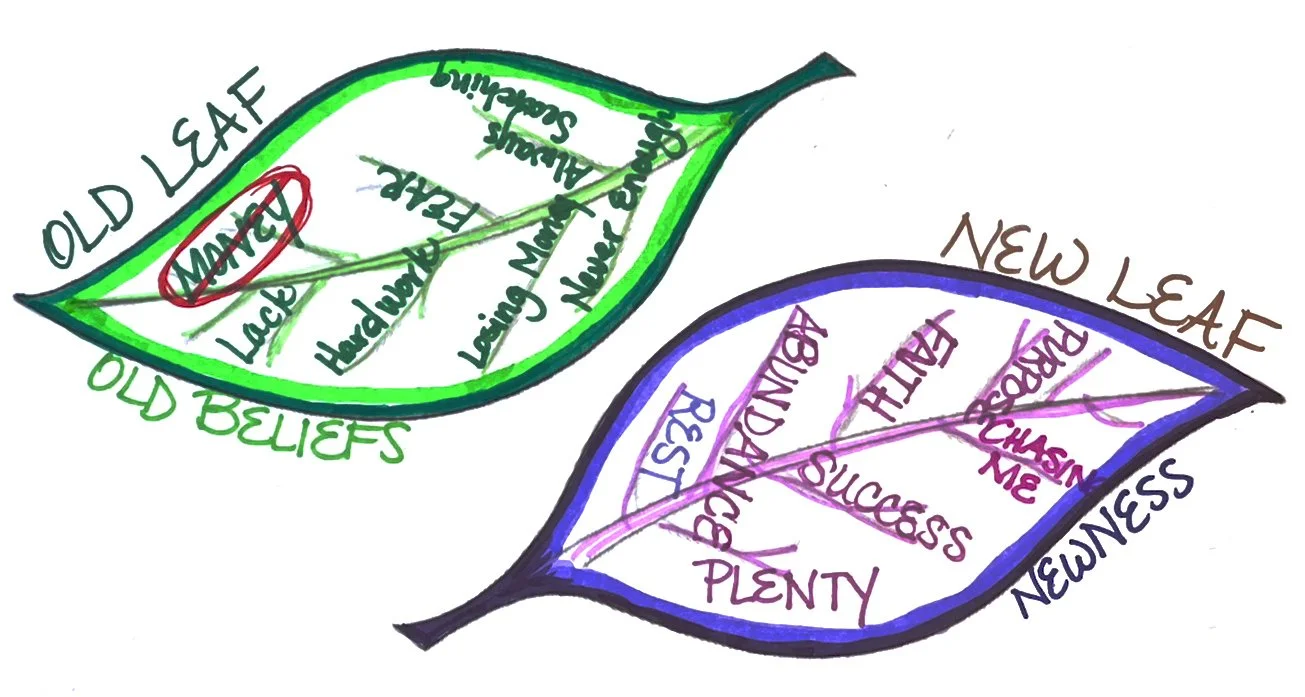
Do you really have to wait until January 1st to make a change in how you relate to money? Let’s turn over a new leaf in this Fall season. Let’s call it a new money leaf. Even though money is a tool, we’ve got to relate to this resource differently.

These belief systems and mindsets will keep us getting exactly what we do not want. Less money!

Currently you might have a lot of emotions tied to money. Where do you think those emotions originally began? What money wounds would you like to begin a healing process to wholeness? “Money wounds?” You might be thinking to yourself…

One of my money wounds was being raised on welfare; there was never enough money. So I made a vow that, when I became an adult, I’d never be broke. Another money wound I recognized in adulthood was having a fear of success. I believed that if I was successful, then I’d have to keep being perfect or great all of the time with no mistakes. Does this sound familiar?

This fear kept me from doing things that would bring more money. These belief systems and mindsets will keep us getting exactly what we DO NOT want. LESS MONEY!

PAUSE & REFLECT

Where did your relationship with money begin?

What wounds do you have that have been brought about because of money? The experiences in childhood and throughout our adult lives surrounding money plays a part in how we relate to it.

Like my wounds were, are they because of always not having enough? Was there enough money while growing up for your needs? Housing, eating, clothing and transportation are the basic needs which in our lives are all attained with money. When those things aren’t present, we intuitively know it is tied to not having enough money. How did your life experiences make you feel about money?

QUESTIONS FOR REFLECTION

When these feelings come up, where do you feel them in your body?

  1. 01

    Do you acknowledge them and feel them?

  2. 02

    Or do you ignore the feelings totally and not tie it to money at all?

  3. 03

    Do you believe you should have money?

During an art session on the subject of money, I realized my fear of success included creating art. However, I didn’t fear failure even though fear of success and failure might look the same. I had to be honest with myself about what was going on inside of me.

The art gave expression where I didn’t have words. Making art evoked feelings, thoughts, and words that were once ignored. When sharing my art and giving words to it, I gained an awareness of my money wounds that I could no longer ignore.

A NEW MONEY LEAF

Do you want to turn over a new money leaf? I invite you to use art to raise your consciousness around your money wounds and begin the healing process.

Janet Hughes Finances Simple Founder Windows Facilitator Ontario, California
THE CONVERSATION CONTINUES

This is the start of a blog series to help you in your healing process to wholeness around money. In the coming months we will bring an awareness that you might have never considered regarding money.

01
FREE WORKSHEET

Turning Over a New Money Leaf

Use the Turning Over a New Money Leaf worksheet to begin exploring your own relationship with money and start the healing process.

DOWNLOAD ENGLISH ↓
02
CREATIVE HEALING RESOURCE

Want to utilize art to help yourself and others address money wounds and other forms of trauma?

ATTEND A TRAINING →

A Window Between Worlds (AWBW) supports hundreds of direct service organizations across the country to incorporate creative expression into their work with trauma survivors. With this blog we uplift the voices of our art workshop facilitators and participants. We invite you to take in this perspective, notice what resonates and explore how it may fit into your life.

Originally posted at: A Window Between Worlds
CONTINUE EXPLORING

More insight for a brighter financial tomorrow.

VIEW ALL INSIGHTS →
02 VALUES & FINANCIAL WELLNESS

Creating Your New Money Season

With a Values Inventory

Your values can become a compass — helping you understand what matters most and whether your financial decisions reflect the life you want to create.

Creating Your New Money Season With a Values Inventory
KNOW YOUR VALUES • KNOW YOUR DIRECTION

Now that you’ve decided to turn over a new money leaf , it’s time to build a solid foundation to support your new money season. In order to take this next step you’ll need to look into your real core values and put ownership to them.

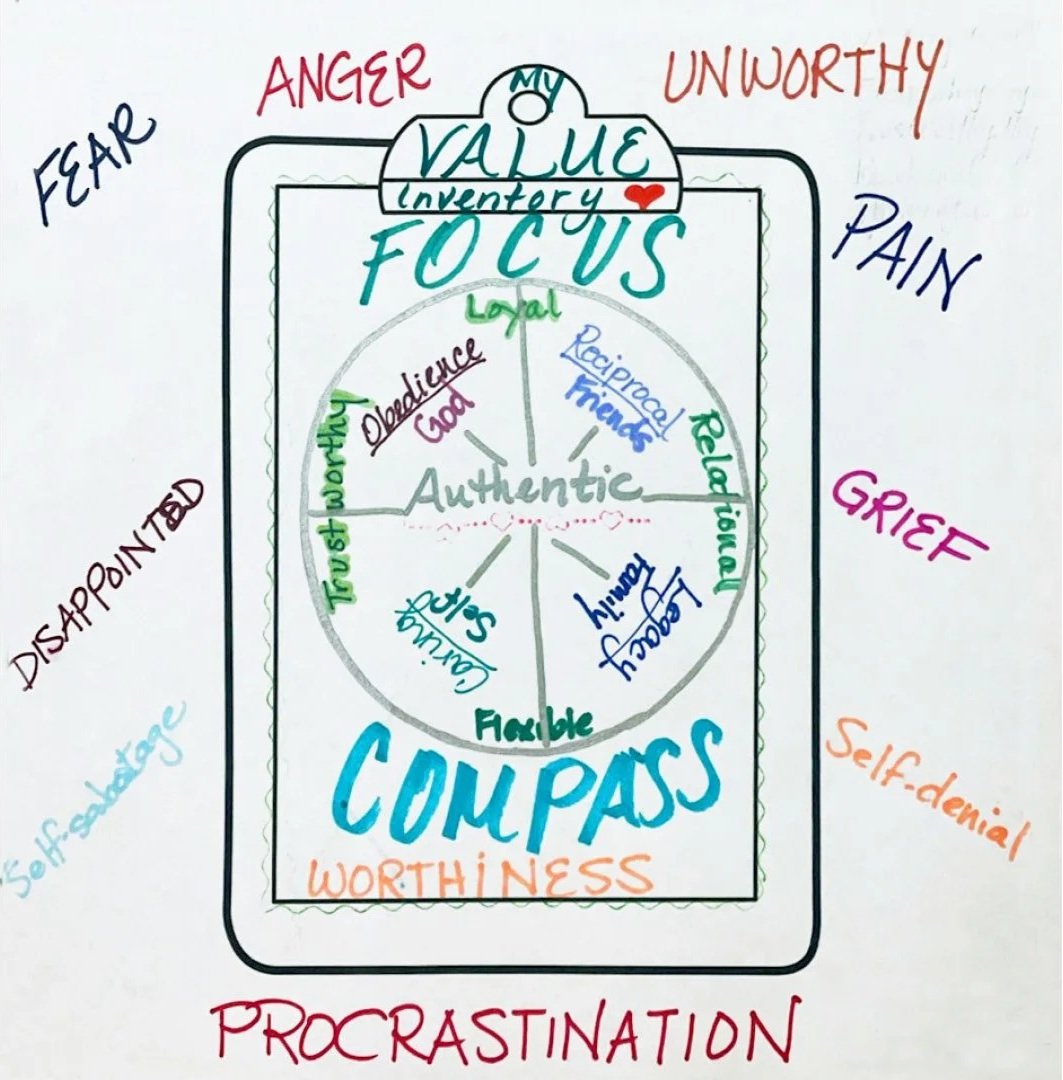
Your values are like a compass, part of the moral code that guides your actions, the root beliefs you operate from. They make a way for you to see the things you wouldn’t otherwise see.

Taking inventory can bring you awareness about what you stand for and how you’d like to show up in your life.

Aligning your values with your financial decisions can help build a healthy relationship with money.

So let’s start with using art to take an inventory of your personal values. Knowing the things that matter to your well-being and happiness will help you assess if your money habits line up with your values. Values can differ from person to person depending on many factors including culture and early childhood experiences.

VALUES AS A COMPASS

What matters to you?

Authenticity Loyalty Trustworthiness Flexibility Relationships

Some of my values are authenticity, loyalty, trustworthiness, flexibility and interpersonal relationships. Some of these values come from my childhood because of the trauma I experienced. As a result I made decisions about what was valuable to me.

People lying — lying about their dedication, lying about my importance to them, lying about things they will do, all played a big part in why I decided to be who I am.

Though some of my values were determined by the traumas I experienced, other values came from the wonderful childhood experiences I had. Family getting together and having such a great time showed me that being hospitable and relational are very important for my community.

VALUES + MONEY

Are your financial decisions aligned with what matters?

Taking inventory can bring you awareness about what you stand for and how you’d like to show up in your life. Aligning your values with your financial decisions can help build a healthy relationship with money.

It can help turn over that new money leaf, leading you in new directions so your money wounds no longer guide your life.

Your inventory also helps with assessing your self-worth. Do you even believe you deserve what you value? Your values show up in how you value yourself.

KNOW YOUR VALUE

Knowing YOUR value will lead you to knowing your values.

The wounds we have experienced in life make us lose focus of our value. Taking this time to assess your values will show how you prioritize YOU.

TAKE INVENTORY

How do I show up in the world?

01

At work?

02

At home?

03

Within my relationships?

04

Within my community?

You may discover what values are important to you in your answers to these questions.

THE HIDDEN SIDE

When fear begins making the decisions.

Now let’s talk about the hidden side of not evaluating your true core values. If there is fear that goes unchecked you may stop yourself from turning over that new money leaf.

Self-sabotage will push you in a place of not wanting to look at your values because sometimes looking at your values means that you actually have to demonstrate what you talk about.

CONTROL
A SIGN OF FEAR

There was a time that control guided how I dealt with money. Control is a sign of fear.

Having been raised on welfare and not having enough led me to feel like my children and I can’t be in a place of needing welfare. This control was restrictive and caused me to hold money so tight that it was always the center of my focus.

I have found that how you do anything is how you do everything. If fear was causing me to be controlling with my money, what other areas was I trying to control from a place of fear?

When we respond to situations from a place of pain, anger, depression, grief, fear, disappointment, procrastination, and self-denial we tend to react with our feelings and not our core values.

Taking the time to reflect on your values will help highlight the path to healing unspoken, unidentified money wounds — the wounds you may not have known you had. By knowing your values, you’ll have a better idea of what direction you want to go.

EXPLORE • DISCOVER • CREATE

Create a visual representation of what you value.

Using the worksheet and list of sample values below, I invite you to explore what values you live your life by or would like to live your life by to help start a new money season.

Then, create a visual representation that reflects the values you are drawn to using words, images, colors and more. Each new value will direct your art creation because it can help other values come to mind.

Let this be a time of exploration, discovery, and fun!

Janet Hughes Finances Simple Founder Windows Facilitator Ontario, California
CONTINUE THE EXERCISE

Take your own Values Inventory.

Use the Values Inventory and Sample Values sheets to explore the values that guide your life and financial decisions.

A WINDOW BETWEEN WORLDS

Want to bring healing art programming to your community?

ATTEND A TRAINING →

A Window Between Worlds (AWBW) supports hundreds of direct service organizations across the country to incorporate creative expression into their work with trauma survivors. With this blog we uplift the voices of our art workshop facilitators and participants. We invite you to take in this perspective, notice what resonates and explore how it may fit into your life.

Originally published at: A Window Between Worlds

KEEP EXPLORING

Continue your journey toward a healthier relationship with money.

FINANCES SIMPLE INSIGHTS

Simple reads. Meaningful shifts.

Practical conversations about money, mindset, financial wellness and building a healthier financial future.

EACH ARTICLE • APPROX. 3 MIN READ

Rewriting Your Money Story

The way you think about money did not begin with your first paycheck. Your money story started much earlier.

Long before most of us understood budgets, credit or savings, we were already learning what money meant. We watched how the people around us handled it. We noticed when there was enough, when there wasn't, and how people behaved when money became stressful.

Those experiences can become beliefs: money is always hard to get, having more money changes people, I am not good with money, or there will never be enough.

PAUSE & REFLECT

Is the money story you're living today actually yours — or is it a story you learned a long time ago?

Notice the story before trying to change it.

Financial healing doesn't require pretending that difficult experiences never happened. It begins with recognizing how those experiences may still influence your choices.

Pay attention to the language you use around money. Do you automatically say, “I can't afford that”? Do you avoid looking at your accounts? Does spending create guilt even when the purchase fits your plan?

Awareness creates an opportunity to choose a different response.

Write what comes next.

A healthier money story can begin with small, believable statements: I can learn how to manage money. I can make thoughtful financial decisions. I can recover from mistakes. I can prepare for my future while still enjoying my life today.

You don't have to rewrite your entire financial life overnight. Start by changing one belief, one habit and one decision at a time.

YOUR NEXT STEP

Write down one money belief you've carried for years. Then write a new statement that better reflects the financial life you want to build.

Building Wealth One Consistent Step at a Time

Wealth doesn't have to begin with a large amount of money. It can begin with a decision to become more intentional with what you already have.

When people hear “building wealth,” it's easy to picture large investment accounts, property or a lifestyle that feels far away. But wealth building is also about creating stability, options and greater control over your financial future.

That process often looks less dramatic than people expect. It may begin with building a small emergency fund, paying down expensive debt, consistently saving or learning how investing works.

A DIFFERENT PERSPECTIVE

Wealth is not only about how much you have. It is also about what your money allows you to withstand, choose and create.

Consistency can matter more than intensity.

A financial plan that works for three weeks and then disappears rarely creates lasting change. Smaller actions that can be repeated month after month have the opportunity to become part of your financial foundation.

Saving $25 consistently can establish a habit. Making an extra debt payment can create momentum. Increasing a retirement contribution when your income rises can allow progress to grow with you.

Give every step a purpose.

Don't build wealth simply because you've been told that you should. Ask what financial stability would make possible in your life. More freedom? More time? A home? Education? The ability to help family? A more comfortable retirement?

Your reason gives your financial habits meaning. And meaningful habits are often easier to continue.

YOUR NEXT STEP

Choose one financial action you can repeat every month. Make it realistic enough that consistency — not perfection — becomes the goal.

Money, Life & Finding Your Balance

Being financially responsible shouldn't require putting your entire life on hold.

Sometimes financial advice sounds like a choice between two extremes: enjoy your money today and risk your future, or sacrifice everything today so that someday you might finally feel secure.

A healthier approach can make room for both responsibility and living.

FIND THE MIDDLE

A financial plan should support your life — not make you feel as though you aren't allowed to have one.

Decide what deserves space in your plan.

Saving matters. Paying your bills matters. Reducing debt matters. But relationships, experiences, rest and enjoyment can matter, too.

The goal isn't to spend without limits. It's to decide intentionally what is important enough to receive some of your resources.

That might mean creating a specific amount for dining out, travel, hobbies or family activities instead of spending first and feeling guilty later.

Balance changes with life.

Your financial priorities at 25 may not look like your priorities at 45 or 65. A new job, family responsibilities, health needs or a major goal can change what balance looks like.

Give yourself permission to revisit the plan. Adjusting your priorities isn't failure. Sometimes it's exactly what responsible financial planning requires.

YOUR NEXT STEP

Identify one thing that brings genuine value to your life. Ask whether your current financial plan intentionally makes room for it.

What Does a Healthy Relationship With Money Look Like?

Financial wellness isn't simply having more money. It's also about how money affects your thoughts, choices and everyday life.

You can know how to create a budget and still feel anxious every time you open your banking app. You can earn more and still believe there will never be enough. You can save consistently and still feel guilty whenever you spend.

That's why a healthy relationship with money involves more than numbers.

FINANCIAL WELLNESS

The goal isn't to never experience financial stress. It's to develop healthier ways to understand and respond to money.

Money becomes a tool, not your identity.

Your account balance can tell you something about your current financial situation. It cannot determine your worth as a person.

Separating self-worth from net worth can make it easier to look at financial challenges without turning every mistake into a judgment about yourself.

You can look at the numbers.

Avoidance often makes financial uncertainty feel larger. A healthier relationship with money includes being willing to look at what is happening — income, bills, debt, savings and spending — even when everything isn't where you want it to be.

Awareness gives you information. Information gives you choices. And choices create the opportunity for change.

YOUR NEXT STEP

Ask yourself: When I think about money, what feeling appears first? Don't judge the answer. Simply notice it. Awareness is a place to begin.

5 Simple Tools to Keep Your Finances on Track

You don't need a complicated financial system to become more organized. A few simple tools can make your money easier to see and manage.

01

A Monthly Spending Plan

Decide where your money needs to go before the month gets away from you. Include necessities, financial goals and room for everyday life.

02

A Bill Calendar

Keep due dates in one place. Seeing when bills arrive can help you plan around your pay schedule and reduce avoidable late fees.

03

A Savings System

Give savings a purpose. Emergency savings, travel, home expenses and other goals can be easier to manage when they aren't all treated as one big pile of money.

04

A Debt Snapshot

List balances, minimum payments and interest rates in one place. You can't create a clear payoff strategy if you can't clearly see what you owe.

05

A Regular Money Check-In

Set aside a few minutes each week or month to review your accounts, upcoming expenses and progress. Regular attention can prevent small issues from becoming bigger ones.

KEEP IT SIMPLE

The best financial system isn't the most complicated one. It's the one you can understand and consistently use.

You don't need to implement all five tools today. Choose the one that would give you the most clarity right now and start there.

YOUR NEXT STEP

Schedule your first 15-minute money check-in. Use the time to look at what's happening, identify one priority and decide on one action to take next.

FINANCES SIMPLE GROUP

Financial healing starts at the root — not at the register.

Small shifts in awareness, intention and action can help create a stronger financial foundation.